First time at an Ipoh kopitiam: how the ordering system actually works
By Sarah · Updated 2026-06-04
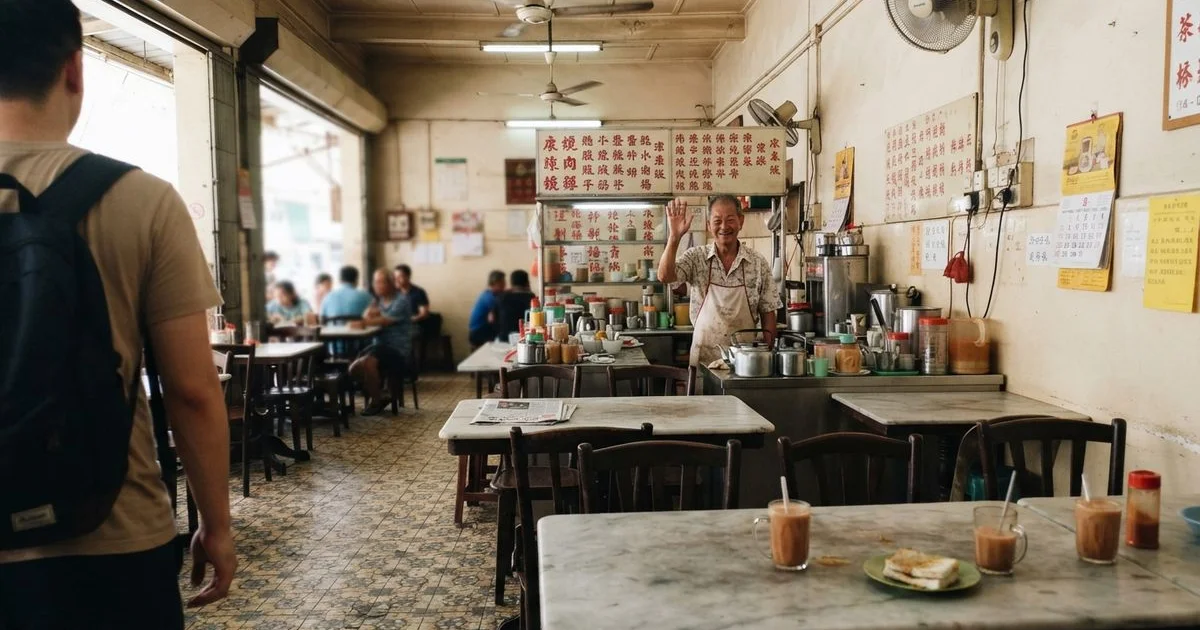
A kopitiam looks simple from the outside, a few tables under one roof, but the way it actually runs trips up a lot of first-time visitors. Unlike a single-menu cafe, a traditional kopitiam is really several independent food and drink stalls sharing one seating area, and each one is ordered and paid for separately.
Step one: grab a table first
Seating isn’t assigned to any single stall, so the first move is finding an open table, not finding the “right” stall. During the morning rush this can mean sharing a table with strangers, which is normal kopitiam etiquette rather than an inconvenience. Once you’re seated, you’re free to order from any stall in the building.
Step two: order drinks and food separately
The drinks stall, usually the one that gives the kopitiam its name, takes your coffee or tea order directly at the counter or from a server who comes by. Food is a different matter: noodle stalls, roast meat stalls, and dim sum carts are typically run by separate vendors, so you walk up to whichever one has what you want and order there.
This is the part that confuses newcomers most. You might end up ordering from three different people for one meal: a drink, a noodle dish, and a side, each arriving from a different stall and each paid separately.
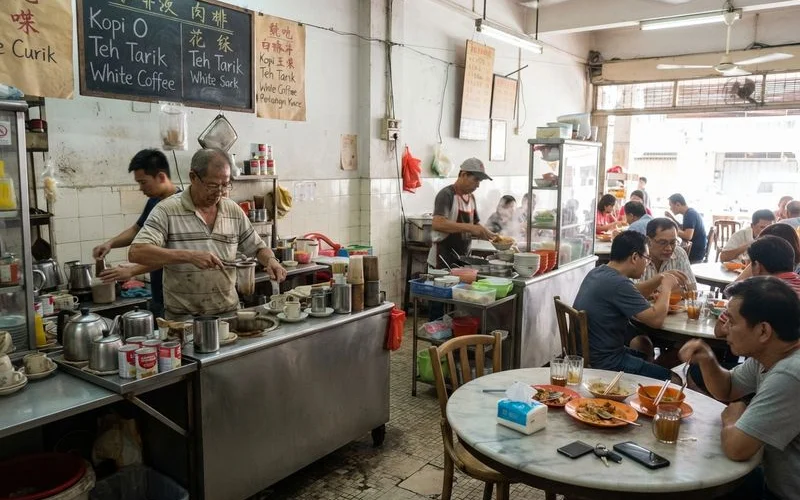
What a typical first order looks like
If you’re not sure where to start, a safe first order is a kopi or kopi-o from the drinks stall, plus a plate of toast with soft-boiled eggs if the kopitiam offers it, which most do. From there, a walk around the room shows you what other stalls are cooking that day, since the actual food selection at a kopitiam often changes based on which vendors show up and what’s fresh that morning. Don’t feel locked into ordering everything at once. It’s completely normal to start with a drink, settle in, then wander over to a food stall once you’ve decided what looks good. If Old Town’s version is specifically what you’re after, the guide to choosing a genuine old town white coffee spot explains what separates the real thing from a name alone.
Step three: pay per stall, usually in cash
Most kopitiams still run cash-first, though this is changing at busier tourist-facing spots. Vendors typically collect payment when the item is served or when you’re ready to leave, not all at once at a central till. It helps to keep small notes on hand, since not every stall has change for a large bill.
| What to expect | Typical practice |
|---|---|
| Ordering | Directly at each stall, not one central counter |
| Payment | Cash, per stall, often on delivery |
| Seating | Shared, first-come, not stall-specific |
| Coffee terms | Local shorthand for sweetness and milk, staff will explain |
Peak hours change the whole experience
Kopitiams tend to be busiest early, often before 9am, as locals stop in on the way to work. During that window, tables turn over fast and finding a seat can mean sharing with strangers as a matter of course. Visiting mid-morning or early afternoon instead gives you more room to linger and an easier time getting a table to yourself, though you’ll miss some of the energy that makes a busy kopitiam feel like the real thing.
A few things that trip up first-timers
Ordering everything from one stall and expecting the rest to come from the same place is the most common mistake. Another is assuming a card machine is available everywhere, when many stalls still only take cash. And tipping isn’t expected or customary at a kopitiam, so there’s no need to add anything on top of the bill.
Once you’ve got the system down
The confusion mostly disappears after one visit. From there it becomes one of the fastest, cheapest ways to eat well in Ipoh: a coffee, a plate of noodles, and a side can come to well under what a single dish costs at a sit-down restaurant. Our directory covers dozens of kopitiams across the city with sentiment-based rankings, and the way we weigh consistency, speed, and value against each other is explained on the methodology page.
Once you know the layout, a kopitiam stops being a puzzle and starts being what it’s meant to be: a fast, informal spot to grab a proper meal without much ceremony.
FAQ
- Do I order and pay at one counter, or at each stall?
- Usually at each stall separately. You tell the drinks stall what you want, then walk to any food stalls you're interested in and order there too, paying each vendor individually when the item arrives or when you leave.
- Can I just sit down anywhere?
- Yes, seating is shared and not tied to a specific stall. Grab any open table first, then walk around to place your orders.
- What if I don't understand the coffee terms on the menu?
- Just ask for kopi or kopi-o and describe how sweet or milky you want it. Staff are used to explaining terms to first-timers, especially at the busier, more tourist-facing kopitiams.
- Is it rude to sit for a long time after finishing?
- During a quiet stretch it's fine. During the breakfast rush, when tables are scarce, it's considerate to free up your seat once you're done.