Why specialty coffee costs more than kopi in Ipoh, and when it's worth it
By Sarah · Updated 2026-06-08
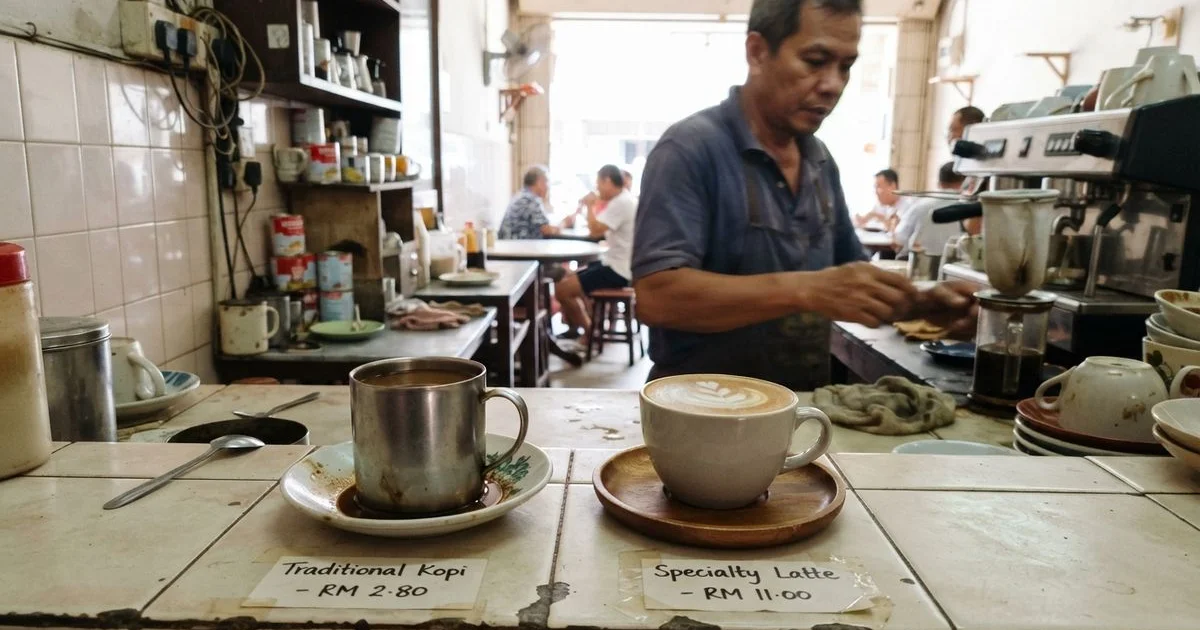
Order a coffee at a kopitiam and it might cost RM3. Order one at a specialty coffee bar a few streets over and it could run RM12 or more for what looks, on the surface, like the same category of drink. The gap isn’t arbitrary markup, it comes from real differences in bean, process, and intent.
The bean is a different starting point
Traditional kopitiam coffee is built almost entirely on robusta beans, often roasted locally with sugar and margarine for that dark, slightly caramelized flavor. Robusta is hardier to grow, cheaper to produce, and higher in caffeine, which historically made it the practical choice for a fast, affordable cup served at volume.
Specialty cafes work mostly with arabica beans, which need cooler growing conditions, more careful handling, and cost more to farm and import. Arabica trades some caffeine strength for more complexity: acidity, sweetness, and flavor notes that vary by origin. That cost difference in the raw bean carries straight through to the price on the menu.
The brewing process takes more time and skill
Kopitiam coffee is typically batch-brewed and served fast, which is exactly the point: speed and consistency at a low price. Specialty coffee is usually made per order, whether through an espresso machine or a manual pour-over, and a trained barista is dialing in grind size, water temperature, and timing for each cup individually. That labor and equipment cost is baked into the price, not added on top for show.
The space itself is part of what you’re paying for
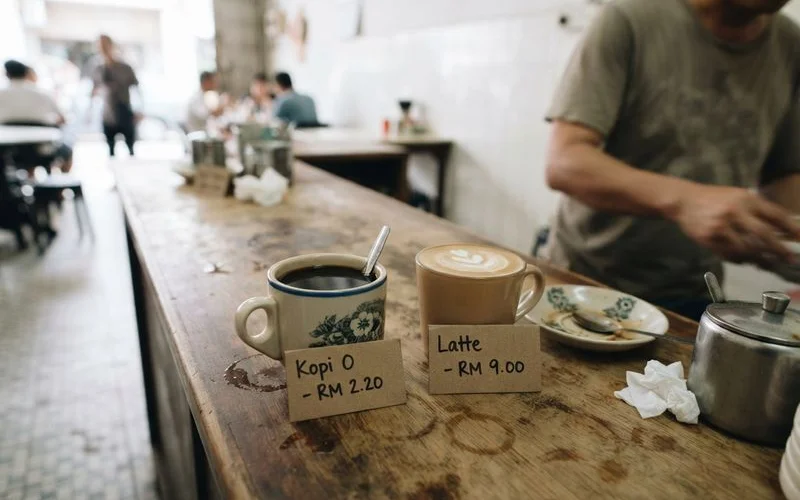
Beyond the cup, the two categories are usually selling a different kind of visit. A kopitiam is built for speed and turnover, plastic stools, shared tables, quick service, so you’re not paying for the setting so much as the drink and the convenience. A specialty cafe more often invests in seating comfort, air conditioning, and a calmer atmosphere designed for lingering, and that overhead shows up in the price whether or not you actually stay long. Knowing this helps explain why a specialty coffee can feel expensive even when the drink itself isn’t dramatically bigger or more complex than a kopi.
A middle ground exists too
Not every option sits strictly at one end or the other. Some kopitiams have started offering a specialty-style drink alongside their usual menu, and some specialty cafes keep a simpler, cheaper option for customers who just want a quick coffee without the full experience. If the binary choice between a RM3 kopi and a RM12 specialty drink feels too limiting, it’s worth checking whether your regular spots offer something in between, since Ipoh’s cafe scene has enough overlap now that a strict either-or choice isn’t always necessary.
A side-by-side comparison
| Traditional kopi | Specialty coffee | |
|---|---|---|
| Typical bean | Robusta | Arabica |
| Typical price | RM3-6 | RM8-15 |
| Brew style | Batch-brewed | Made fresh per order |
| Caffeine | Higher per cup | Generally lower per cup |
| What you’re paying for | Speed, strength, low cost | Origin, technique, a slower experience |
When each one is actually the right call
A kopi makes sense when you want something fast, strong, and cheap, especially first thing in the morning or between errands. Specialty coffee makes more sense when you have time to sit, you’re curious about how a specific bean or brew method tastes, or you’re settling in to work or catch up with someone for an hour. Neither is objectively better; they’re built for different moments. If you’re ready to move past your usual order, exploring Ipoh’s specialty coffee scene has a practical starting point for what to try first.
Our directory covers both traditional kopitiams and specialty roasters across Ipoh, with rankings built from a published, sentiment-based scoring approach explained on the methodology page.
The price gap makes more sense once you see it as two different products rather than one drink with a markup. Once that clicks, deciding between a kopi and a specialty coffee becomes less about which is “better” and more about which fits what you actually want out of the visit, and there’s nothing wrong with switching between the two depending on the day.
FAQ
- Is specialty coffee just kopitiam coffee with a markup?
- No. The beans, roasting process, and brewing method are genuinely different, not just the packaging. Robusta and arabica beans produce different flavors, and manual brewing takes more time and training than batch-brewing.
- Which one has more caffeine?
- Robusta beans, the base of most kopitiam coffee, contain roughly double the caffeine of arabica beans by weight, so a strong kopi-o can out-caffeinate a specialty espresso drink.
- Can a kopitiam ever be the better choice even if I like specialty coffee?
- Yes, if you want something fast, cheap, and reliably strong rather than a slower, more deliberate cup. Plenty of specialty coffee drinkers still default to kopitiam kopi for a quick morning fix.
- Do I need to pick one or the other permanently?
- Not at all. Most regulars in Ipoh move between both depending on the day, a quick kopi on a rushed morning and a specialty pour-over when there's time to sit and enjoy it.